
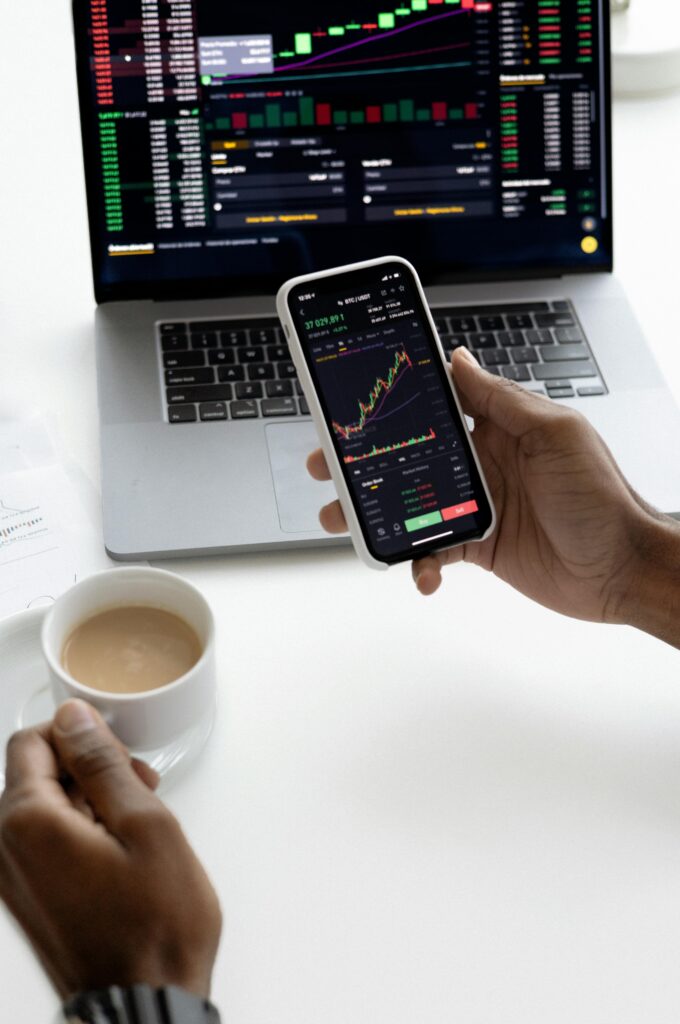
Can You Trade with Just $100?
Many beginners wonder if they need thousands of dollars to start trading. The truth is—you can start trading with as little as $100. But before you jump in, it’s important to understand the challenges, risks, and smart strategies that come with starting small.
Let’s break it down.
 Is It Possible to Start with $100?
Yes, absolutely. Thanks to online brokers, fractional shares, and forex/crypto markets, you can open an account with $100 and begin trading. But here’s the catch—small accounts grow slowly, and mistakes can wipe them out quickly.
Think of it this way: trading with $100 is more about learning than earning.
 Smart Strategies for Small Accounts
If you want to make the most of your $100, here are some practical tips:
1. Choose the Right Market
Stocks: Go for brokers that allow fractional shares (so you can buy $10 worth of Amazon instead of the full share).
Forex & Crypto: These markets let you start small, but be careful with leverage.
2. Focus on Risk Management
Never risk more than $2 per trade (2% of $100).
Always use a stop-loss.
3. Trade Liquid & Affordable Assets
Avoid expensive, illiquid stocks.
Stick to ETFs, penny stocks (carefully), or major forex pairs/cryptos with high volume.
4. Learn Before You Earn
Use your $100 account as a learning tool.
Practice strategies, test setups, and gain experience without risking huge amounts.
5. Reinvest Your Profits
Don’t withdraw small wins.
Compound your gains—$100 → $150 → $200 → $500 adds up over time.
 Can $100 Grow Into Something Bigger?
Yes, but not overnight. Many successful traders started with small accounts. The key is to treat your $100 as a training ground—focus on building skill and discipline first. As you grow confident, you can add more capital and scale your strategy.
Types of Trading You Can Do with $100
Forex Trading – Some brokers let you open a micro or cent account where you can trade very small lot sizes.
Stocks (Fractional Shares) – Platforms like Robinhood, Zerodha (India), or eToro allow you to buy fractions of shares with as little as $1.
Cryptocurrency – Exchanges like Binance, Coinbase, and WazirX let you start with even less than $100.
Options Trading – Risky, but some brokers allow you to trade options contracts with small capital.
CFDs (Contracts for Difference) – Let you speculate on assets with leverage, but they carry high risk.
Challenges of Trading with $100
Limited Capital → Small profits unless leverage is used.
Risk of Over-leverage → High leverage can wipe out your account quickly.
Emotional Pressure → Small losses feel bigger because your account balance is low.
Slow Growth → Turning $100 into $1,000 takes discipline and time.
Realistic Expectations
Don’t expect to get rich quickly.
A $100 account should be seen as practice capital.
If you can grow $100 to $120 consistently, you’re learning discipline.
Many successful traders start small, master the skills, and then scale up with more capital.
Many beginners wonder, can you trade with just $100? The answer is yes, but it depends on the market you choose and how you manage risk.”
6. Final Thought
Yes, you can trade with $100, but the goal should not be big profits right away. Instead, use it as a training ground to build skills, discipline, and confidence. Once you’re consistent, you can add more capital and aim for larger returns.

Pro Tip: Adding real examples of brokers/platforms, a risk vs reward chart, and a step-by-step beginner guide can make your blog rank higher on SEO.
Can you trade with just $100? Check this guide on [Investopedia](https://www.investopedia.com/).